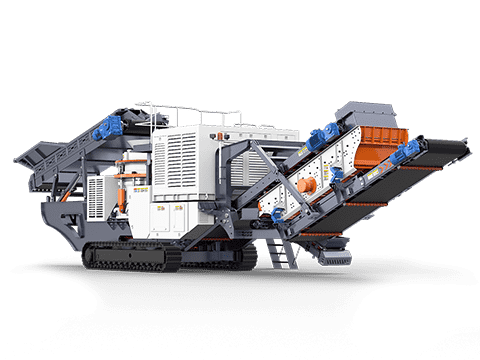
A hammer crusher is a typical impact crushing equipment that crushes materials mainly through the high-speed striking and impact of rotating hammer heads. It is widely applied to crush medium-hard materials such as limestone, coal gangue, gypsum, and coal in mining, construction, coal processing and other industries. With the advantages of compact and simple structure, convenient operation and maintenance, large crushing ratio, uniform product particle size and low energy consumption, it can directly crush bulk materials into required fine or medium-fine particles, making it one of the most commonly used crushing machines in industrial production.
Detecting Cracks in Hammer Crusher Hammer Heads
1. Visual Inspection: Perform regular visual checks on the hammer heads to identify obvious surface cracks, deformations, or fractures. This initial screening allows for quick and straightforward detection of severe damage.
2. Ultrasonic Testing (UT): Utilize ultrasonic testing to detect internal and sub-surface cracks that are invisible to the naked eye. The technology analyzes reflected wave signals to accurately locate and measure the depth of cracks inside the hammer head.
3. Magnetic Particle Testing (MT): Apply magnetic particle testing for ferromagnetic hammer heads. Magnetize the surface and sprinkle magnetic particles; any cracks will disrupt the magnetic field, attracting particles to form visible traces for precise defect identification.
4. Penetrant Testing (PT): Conduct penetrant testing by applying a penetrant to the surface, allowing it to seep into fine cracks, cleaning the surface, and then developing the image. This method effectively reveals tiny surface cracks that might be missed during initial checks.
5. Comprehensive Monitoring: Integrate real-time monitoring of equipment parameters such as abnormal vibration and unusual noise. A sudden increase in oscillation or unusual sound during operation often serves as an early warning sign of potential crack propagation, prompting further detailed inspections.
Predicting Hammer Head Wear in Hammer Crusher
1. Regularly measure and record the key dimensions of the hammer head, including working thickness and width, then compare them with original data to accurately judge the wear degree and predict remaining service life.
2. Analyze the wear resistance of hammer head materials and actual working conditions such as material hardness, feed rate and crushing ratio, so as to scientifically calculate the wear rate and service cycle.
3. Monitor the vibration signals of the crusher during operation; a significant rise in vibration amplitude usually indicates uneven wear or damage of the hammer heads.
4. Track the real-time power consumption of the equipment, since increased power consumption often reflects lower crushing efficiency caused by gradual wear of the hammer heads.
5. Regularly check the particle size and output of the finished product; coarser particle size and lower output are direct signs that the hammer heads are seriously worn and need to be replaced in advance.
Practical Application Case
A coal mine crushing station adopted a hammer crusher for coal gangue processing. In routine maintenance, the on-site team used visual inspection, magnetic particle testing, and ultrasonic testing to regularly check hammer heads, and successfully detected tiny cracks on two hammer heads in advance, avoiding sudden breakage accidents. Meanwhile, they established a complete wear prediction system: regularly measuring hammer head dimensions, monitoring equipment vibration and power consumption, and analyzing finished particle size changes to accurately judge the wear degree. Based on the detection and prediction results, the mine arranged to replace worn hammer heads during planned maintenance, instead of waiting for failures to occur. After implementing these measures, the equipment’s unexpected downtime was reduced by more than 70%, the service life of hammer heads was effectively extended, and the crusher maintained stable and efficient operation, providing a strong guarantee for continuous production in the coal mine.
If you need more information about hammer crusher equipment, please feel free to contact our online customer service. We will respond to your questions promptly.