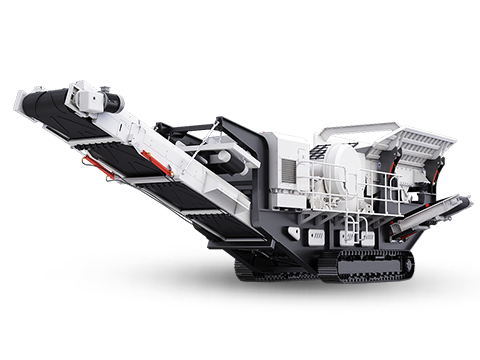
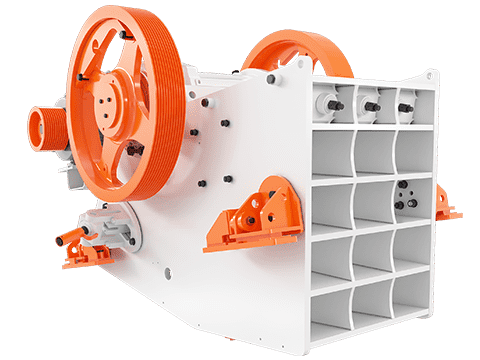
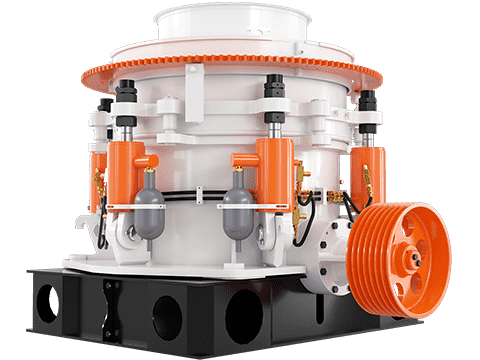
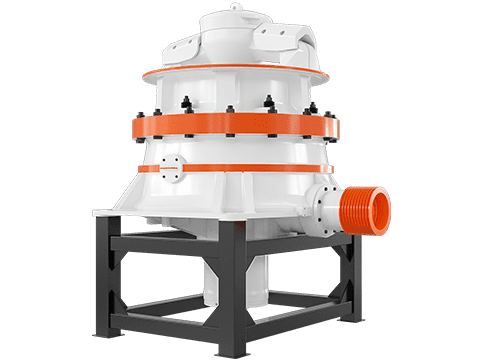
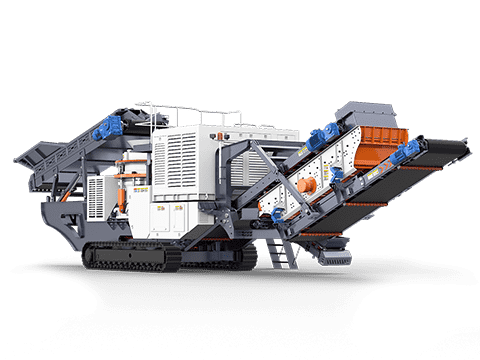
The limestone cone crusher crushes material through the combined effects of compression, impact, and bending between the moving cone and the fixed cone. Suitable for medium and fine crushing processes, it offers advantages such as high crushing efficiency, uniform product particle size, and easy maintenance, and is widely used in industries such as building materials, chemicals, and metallurgy.
1. Improper crushing ratio settings. If the crushing ratio is too high, it will increase the proportion of needle-shaped particles in the output material; if the crushing ratio is too low, it will likely cause a decrease in equipment output, an increase in internal material circulation, and accelerated wear on equipment components.
2. Unreasonable discharge opening settings. The size of the discharge opening is a direct factor affecting the output particle size; if set too large or too small, it will result in output particle sizes that do not meet the preset requirements.
3. Feed size exceeds the specified range. Excessively large feed particles exceed the crusher’s rated processing capacity, leading to reduced crushing performance and, consequently, affecting the uniformity of the output particle size.
4. Severe wear on the liner plates. As core components in direct contact with the material, worn liner plates alter the original shape of the crushing chamber, disrupting the equipment’s normal crushing trajectory and thereby affecting crushing performance and the accuracy of the output particle size.
5. Failure of the hydraulic system or mechanical adjustment mechanism. When the automatic discharge opening adjustment system (hydraulic system or mechanical adjustment mechanism) malfunctions, it prevents proper regulation of the discharge opening size, ultimately resulting in abnormal output particle size.
6. Insufficient crushing power. Insufficient driving force in the limestone cone crusher leads to incomplete material crushing, failing to achieve the intended crushing effect, and consequently resulting in output particle sizes that do not meet requirements.