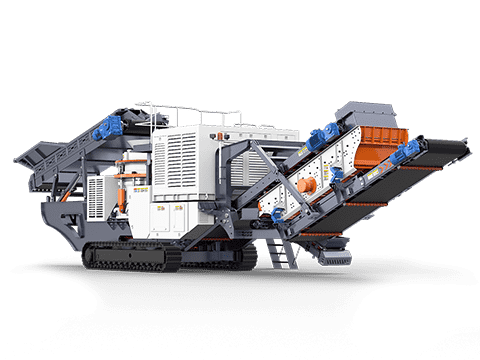
An impact crusher uses a high-speed rotor to collide with material, crushing it. It is suitable for crushing medium-hard and lower-hard materials, such as limestone, coal, and gypsum. Its operating principle is that the high-speed rotation of the rotor strikes the material against the impact plate, where it rebounds and collides with other materials, crushing it.
What is the function of the impact plate in an impact crusher?
1. Material impact and crushing
The impact plate catches materials thrown by the high‑speed rotor, rebounds them in the reverse direction, and promotes mutual collisions between materials, thereby completing crushing.
2. Enhanced crushing efficiency
By creating intensive impact energy between the rotor and the impact plate, it boosts crushing force and breaks large materials into finer particles efficiently.
3. Adjustable product particle size
The gap and position of impact plates can be adjusted to control impact angles, so as to regulate the final particle size and optimize the crushing process.
4. Protection against direct wear
The impact plate endures strong impact and abrasion; it is usually made of wear‑resistant materials such as high‑chromium alloy to extend service life and protect other key components.
How to Reduce Vibration in an Impact Crusher?
1.Stable installation foundation
Install the crusher on a rigid, level foundation that can fully support the equipment weight and absorb vibration, minimizing operational oscillation.
2. Rotor dynamic balancing
As the core component, the rotor must be precisely balanced during manufacturing. Dynamic balancing correction is applied to eliminate vibration caused by mass asymmetry.
3. Effective vibration isolation system
Equip the crusher with vibration isolators including springs and rubber pads to absorb shock and vibration, preventing transfer to the ground and adjacent equipment.
5. Optimized operating parameters
Adjust rotational speed, feed rate, and other parameters to reduce unnecessary impact and load fluctuation, thus lowering excessive vibration during operation.
Practical Application Case
A limestone crushing plant used an impact crusher for aggregate production. Initially, the machine showed severe vibration, unstable particle size, and rapid wear of impact plates. After optimization:
1.The gap and angle of impact plates were precisely adjusted to stabilize particle size and reduce impact load.
2.The rotor was re‑balanced, and spring‑rubber vibration isolators were installed.
3.Operating speed and feed rate were tuned to match material hardness.
After improvement, vibration amplitude dropped by about 65%, finished product qualification rate reached over 95%, and service life of impact plates was extended by about 80%. The unit ran smoothly for long hours, with significantly lower maintenance and downtime.
If you have further questions about impact crushers, please feel free to contact our online customer service. We will respond promptly to your questions.